
Research Projects
Active Projects
African American Men’s Project (AMP)
The Family and Community Health Study (FACHS)
Parents and Children Together (PACT)
Promoting Strong African American Families (ProSAAF)
SAAF Healthy Adults Project (SHAPE)
STAR (Strong Teens Achieving Resilience)
Georgia Home Visiting Program: Technical Assistance, Training, and Performance Monitoring (GAHV TAQ)
Previous Projects
Principal Investigator: Gene Brody
Funding Agencies: NIDA
Project Period: 2014-2019
Through a P30 grant, the National Institute on Drug Abuse funded the creation of The Center for Translational and Prevention Science (CTAPS), a Core Center of Excellence, within the Center for Family Research. This project was a collaborative research effort that worked to improve the lives of rural African American families through innovative, transdisciplinary research on the relationship between stress, stress biology, and substance use. A central question was, in what ways does stress “get under the skin” to influence individuals’ development and increase vulnerability to drug use and sexual risk behaviors?
More specifically, the project worked to gain a better understanding of the development of drug use and sexual risk behavior among children, adolescents, and young adults. Most of the research about these important public health concerns has focused primarily on the environmental contexts in which youth spend time: families, peer groups, neighborhoods, and schools. An impressive body of research has been generated that describes how these influences either deter or create risks for drug use and sexual risk behavior. Other important factors, however, were missing, ones that are critical for understanding why some youth abstain from risk behavior and others develop serious problems that can lead to drug abuse and sexually transmitted infections including HIV. These factors are invisible to the naked eye because they take place “under the skin” of children and youth through inflammatory, neuro-endocrine, and neurocognitive systems change as children and youth adapt to stress. CTAPS research examined children and youths’ social worlds in concert with inflammatory and neuroscience systems to provide new insights into the development of drug use and abuse and risky behavior. CTAPS was a transdisciplinary effort that included a team of scientists from departments of Psychology, Prevention Science, Public Health, Social Work, and Psychiatry. These investigators were located in universities throughout North American including the University of Georgia, Emory University, Northwestern University, the University of California -Los Angeles, the University of Houston, the Icahn School of Medicine at Mount Sinai, McMaster University (Canada), the University of North Carolina, the University of Iowa, and Howard University.
CTAPS was supported by P30DA027827 from the National Institute on Drug Abuse and by the Office of the Vice President for Research at the University of Georgia.
Principal Investigator: Gene Brody
Funding Agencies: NIDA
Project Period: 2009-2014
In what ways does the unique genetic makeup of an individual combine with the social context in which he or she lives to determine drug use and sexual risk tendencies?
CGAPS is a Core Center of Excellence funded by the National Institute on Drug Abuse. The overall mission of CGAPS is to gain a better understanding of the development of drug use and sexual risk behavior among children, adolescents, and young adults. Most of the research about these important public health concerns has focused solely on the environmental contexts in which youth spend time: families, peer groups, neighborhoods, and schools. Social scientists have generated an impressive body of research that describes the ways in which these important influences either deter or create risks for youth drug abuse and sexual risk behavior. An important dimension, however, is missing, one that is critical for understanding why some youth abstain from risk behavior altogether, others engage in occasional risk behavior, and some develop serious problems that can lead to substance abuse and sexually transmitted infections including HIV. The missing dimension is each youth’s unique genetic makeup. Currently, the ways in which an individual’s unique genetic makeup combine with the social context in which he or she lives to determine drug use and sexual risk tendencies are not well understood. We hope that the research that CGAPS sponsors will provide greater insight into this complex interplay and, in turn, influence prevention models currently used to deter involvement with drugs and sexual risk behavior.
For more information, please visit the CGAPS webpage.

Principal Investigator: Steven Kogan
Funding Agency: NIAAA
Project Period: 2012-2017
How effective is a dual-inoculation strategy of prevention programming in minimizing risk behaviors among youth?
In this study, we will recruit a sample of 460 African American families into a four-arm randomized prevention trial and evaluate the differential alcohol prevention effects of (a) a dual inoculation of prevention (youth receive SAAF at age 11 and SAAF–T at age 14) compared to (b) receipt of only one preadolescent inoculation (SAAF only), (c) one mid-adolescent inoculation (SAAF-T only) or (d) no inoculation (control). Our specific aims regarding the efficacy of the dual inoculation strategy are to test the following hypotheses: (1) Rural African American youth randomly assigned to participate in two developmentally appropriate prevention inoculations (SAAF and SAAF–T) will demonstrate lower rates of alcohol use initiation and frequency of use in high school than will youth who receive one (SAAF only or SAAF–T only) or no inoculations. We also expect that single inoculation youth (SAAF only or SAAF–T only) will demonstrate lower rates of alcohol use in high school than will control youth receiving no inoculations, and (2) Effects on alcohol use of a dual inoculation strategy will be mediated by consistently high levels of intervention-targeted protective processes across adolescence.

Principal Investigator: Carol MacKinnon-Lewis (USF), Christina Grange (UGA)
Funding Agency: NIDA
Project Period: 2012-2014
Is a live, web-based training as effective as a traditional facilitator (in-person) training at preparing facilitators to implement a universal preventative intervention program with strong fidelity?
In this pilot project 40 facilitators in Gadsen County, Florida will receive 24 hours of facilitator training for the Strong African American Families (SAAF) program. A two-wave pre-post design will be conducted with four groups of 10 facilitators to examine the feasibility of an internet-based training intervention to foster facilitators’ fidelity to the SAAF intervention model. After each cohort completes training, they participate in four different four hour meetings to review curriculum content. Facilitator fidelity to the intervention will also be assessed based on independent observer ratings during implementation session with families. Recruitment for this project began in July 2012 and will conclude in February 2014.
Principal Investigator: Anita Brown
Funding Agency: Governor’s Office for Children and Families
Project Period: 2011-2013
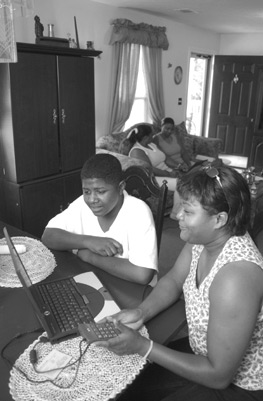
CFR is responsible for the technical assistance and training associated with an Enhanced Engagement Protocol designed to increase the numbers of at risk families who enroll in home visiting as well as extend the number of months they remain engaged so as to receive full benefit of the program. The protocol is based on the recruitment and retention protocol that CFR has utilized for the past several decades to enhance research participation. The primary strategy is the activity of a Community Peer Liaison (CPL) who is a graduate of the home visiting program and works in cooperation with the family support worker to support a family’s involvement in home visiting.

Principal Investigator: Gene Brody
Funding Agency: Governor’s Office for Children and Families
Project Period: 2011-13
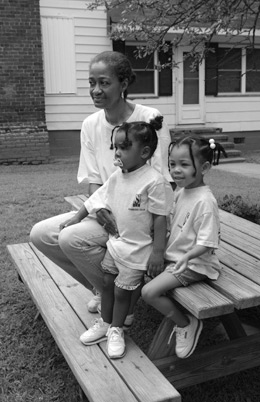
In a competitive proposal submitted to HRSA as part of the Maternal, Infant, and Early Childhood Home Visiting Program, the Great Start Georgia leadership team described two activities that would be crucial to Georgia’s home visiting network infrastructure: (1) a Department of Public Health Central Intake and Referral Center and (2) an Enhanced Engagement Strategy designed to improve home visiting engagement rates of at risk families. CFR is responsible for evaluating both of these initiatives. For the Information and Referral Center evaluation, CFR will compare the IRC-resourced counties with matched control counties to examine number of families linked to resources and rates of utilization of public and privately funded services for young children. A randomized trial is being conducted for the Enhanced Engagement Protocol evaluation allowing a comparison of engagement and retention rates between the intervention and control groups.
Principal Investigator: Anita Brown
Funding Agency: Governor’s Office for Children and Families
Project Start Date: March 1, 2012

Principal Investigator: Gene Brody
Funding Agency: NIAAA
Project Period: 1999-2011
How can parents and communities help preadolescents to make positive choices as they gain increasing autonomy throughout adolescence?

Principal Investigator: Gene Brody
Funding Agency: NIDA
Project Period: 2006-2012
Will a family-based program designed to support rural African American teens in making positive decisions and avoiding risky behaviors be effective?

Principal Investigator: Phaedra Corso
Funding Agency: NIDA
Project Period: 2008-2013
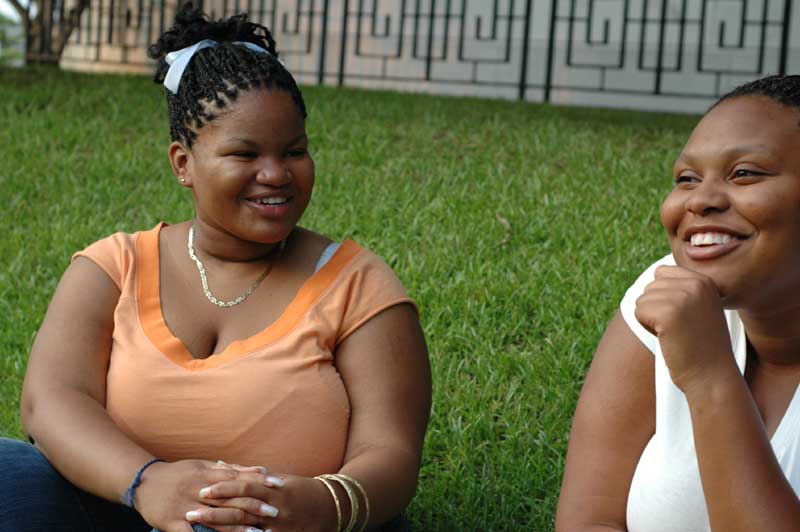
In 2008, NIDA funded an economic evaluation of the SAAF-T program. The efficacy of this program, targeted for youth, ages 14-16 and their primary caregivers, and designed to minimize risky behaviors and support successful transition to young adulthood was explored in the RAAFH project. Two additional data assessments were collected from participating families as part of this economic evaluation. Data indicating program outcomes were considered and program requirements (time burden and resources) were calculated to determine the cost effectiveness of program implementation.
Principal Investigator: Gene Brody
Funding Agencies: NIDA and W. T. Grant Foundation
Project Period: 2004-2010
How can parents and other supportive adults help African American teens make a positive transition to adulthood?
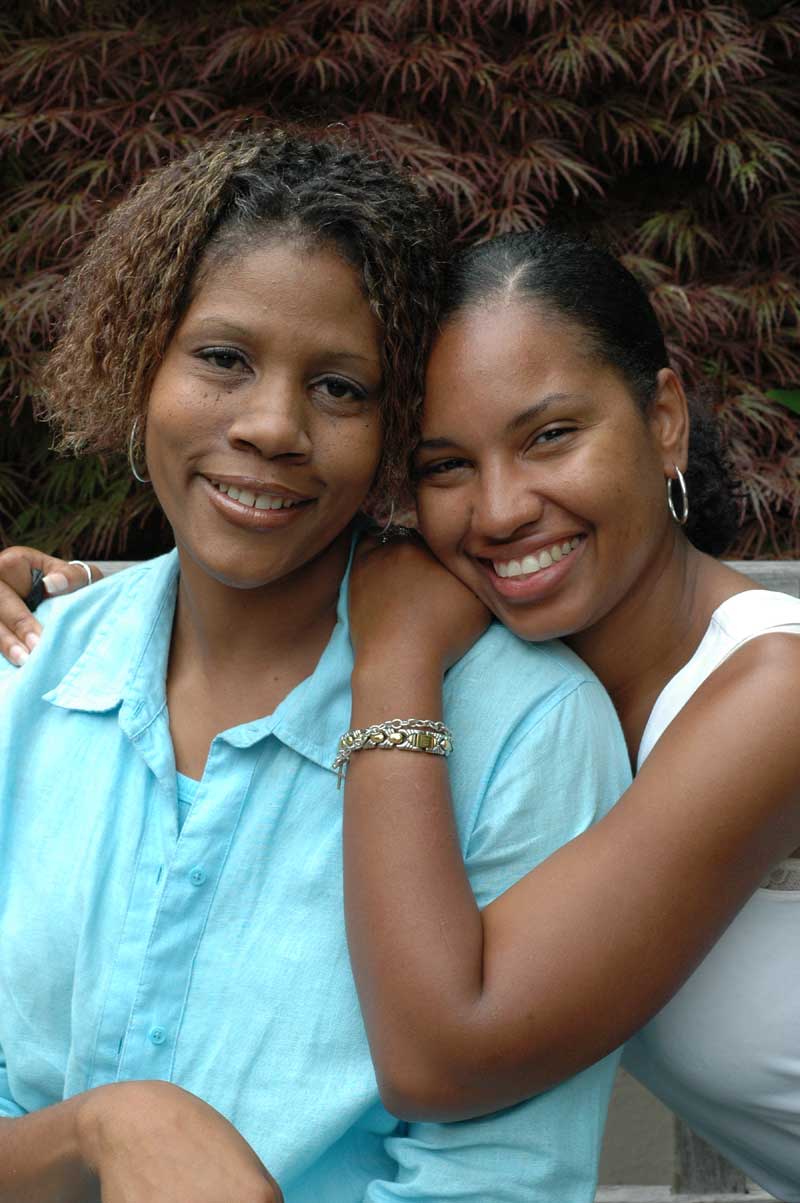
AIM is a federally funded research study designed to evaluate the effectiveness of a 6-week, family-based program created to support African American teens in their positive transition to adulthood. In 2006, W. T. Grant Foundation provided additional funding to allow an exploration of the influence that supportive adults other than an adolescent’s parents might have on the transition to adulthood. In this clinical trial, families were randomly assigned to participate in one of three conditions: (1) the family-based treatment, (2) the family-based treatment plus a 1-day workshop for supportive adults other than parents, or (3) a control condition. Substance use is the key outcome under study.
Principal Investigator: Steve Kogan
Funding Agencies: NIDA
Project Period: 2006-2011
What health issues concern rural African American young adults?
Connections had a two-pronged purpose: (1) to explore various health issues that are relevant for rural African American adults after they have left the high school environment, and (2) to test a sampling strategy, Respondent Driven Sampling, that has been used with other difficult-to-reach populations. Data were collected from about 300 young adults between the fall of 2007 and winter of 2008. Participants completed a 90-minute questionnaire on a laptop computer and were later asked to refer up to three other people for participation. This study was used to inform a larger-scale study of African American Men’s Health (see AMP).

Principal Investigator: Steven Beach
Funding Agencies: John Templeton Foundation and Administration for Children and Families
Year Project Began: 2005-2008
Is ProSAAM, a program designed to strengthen African Americans’ marriages, effective?

Principal Investigator: Gene Brody
Funding Agencies: Governor’s Office for Children and Families
Year Project Began: 1999-2010
Is the Healthy Families Georgia home visiting program effective in promoting positive parenting and preventing child abuse?